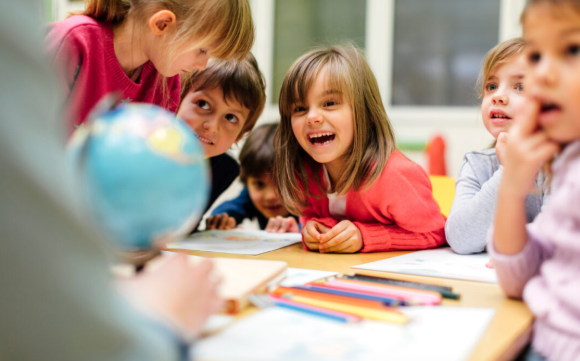
The first few years of education can shape how children view classrooms, learning, friendships, and independence. A thoughtfully chosen nursery school can provide a gentle introduction to structured learning while still respecting a young child’s natural need to play, move, explore, and communicate.
For parents, the goal should not simply be finding a place that introduces academic concepts early. A strong nursery environment supports several areas of development at the same time. Language, physical coordination, social confidence, creativity, emotional awareness, and independence all contribute to a child’s readiness for future learning.
What Does Balanced Early Learning Look Like?
Young children rarely develop through one type of activity alone. They need varied experiences that challenge different abilities without making the day feel overwhelming.
A balanced nursery school might include storytelling, early number activities, creative projects, outdoor play, music, movement, practical tasks, and free exploration.
Each experience can contribute something different. Stories encourage listening and vocabulary, while building activities support planning and coordination. Group games introduce cooperation, and creative activities give children opportunities to express original ideas.
See also: Used Equipment Financing: A Practical Guide for Business Owners
Learning Should Match a Child’s Development
Children of the same age can have very different interests and abilities. One child may speak confidently in a group, while another communicates more comfortably during individual activities.
Quality early education recognizes these differences. Children should receive suitable challenges without being rushed simply to meet uniform expectations.
Language Grows Through Everyday Conversation
Language development is an important part of nursery education, but it does not need to happen only during formal lessons.
Children can learn new words while listening to stories, talking about pictures, singing songs, discussing activities, or simply having conversations with educators and classmates.
A nursery school should create plenty of opportunities for children to express themselves.
Listening Is Just as Important as Speaking
Communication involves understanding others as well as expressing ideas.
Group discussions and storytelling can help children practice listening. Conversations with peers introduce them to different viewpoints and communication styles.
Educators can strengthen these skills by giving children enough time to answer rather than completing sentences for them.
Movement Supports More Than Physical Fitness
Young children naturally want to move, and physical activity is closely connected with development.
Running, balancing, climbing, dancing, and outdoor games can strengthen larger muscle groups and improve coordination. Meanwhile, activities such as drawing, building, threading, or manipulating small objects support fine motor control.
A well-planned nursery school includes both types of movement throughout the day.
Physical experiences can also strengthen confidence as children discover new things their bodies can accomplish.
Creative Activities Encourage Flexible Thinking
There is something valuable about giving a child materials without insisting that every finished creation look identical.
Drawing, painting, craft, music, construction, and imaginative play encourage experimentation. Children make choices, change their minds, and discover different ways to approach a task.
Creativity Makes Room for Individual Expression
When children are given some freedom within an activity, their personalities and interests can emerge naturally.
A creative project may also develop concentration, coordination, decision-making, and persistence. These benefits make creativity an important part of early education rather than simply an occasional recreational activity.
Social Development Happens Through Experience
A nursery classroom provides children with regular opportunities to interact with peers.
They may need to wait for an activity, share a space, join a game, communicate preferences, or cooperate on a group project.
These experiences cannot be learned entirely through explanation. Children need opportunities to practice them.
A nursery school can provide guidance when difficulties arise while gradually helping children become more confident in social situations.
Everyday Responsibilities Build Independence
Young children often enjoy being trusted with manageable responsibilities.
Putting away learning materials, carrying personal belongings, tidying an activity space, or making a simple choice can contribute to independence.
Give Children Time to Try
Adults can perform most everyday tasks much faster than young children. However, efficiency should not always be the goal.
When children receive enough time to complete suitable tasks themselves, they practice concentration and persistence.
Educators can offer support when required without automatically taking over.
Predictable Routines Provide Reassurance
Nursery may initially feel unfamiliar, especially for children who have spent most of their time at home.
A predictable daily rhythm can make the environment easier to understand. Children gradually learn when different activities occur and what is expected during transitions.
Familiar routines can reduce uncertainty while supporting independence.
At the same time, the schedule should have enough flexibility to respond to the needs of young learners.
Location Matters for Everyday Consistency
Parents naturally focus on educational quality, but the practical side of attending nursery also deserves attention.
A manageable daily journey can make morning routines easier and reduce unnecessary travel for young children.
Families exploring nursery education in Pune can review the nursery school location in Kharadi while considering accessibility, drop-off arrangements, and their regular schedule.
Convenience should complement educational quality rather than replace it, but it can significantly affect the everyday experience.
Strong Parent Communication Supports Children
Families and educators see children in different situations, making communication between them valuable.
Parents can share information about changing routines or emerging interests. Educators can provide observations about classroom participation, friendships, communication, and developing skills.
This exchange helps both sides understand the child more fully.
Ask Meaningful Questions
Parents do not need to focus only on whether their child completed a particular academic activity.
Questions about what interested the child, how they participated, or which skills they are developing can provide a broader picture of progress.
Conclusion
A nursery school should provide much more than early academic preparation. Young children benefit from an environment where language, movement, creativity, social interaction, independence, and emotional security develop alongside early learning concepts.
Parents should look for balanced routines, supportive educators, meaningful activities, safe spaces, and opportunities for children to make age-appropriate choices.
When early education respects the whole child, learning becomes more than completing tasks. It becomes an active process of exploring ideas, building relationships, developing confidence, and discovering new abilities. That balanced foundation can help children approach the next stage of education with curiosity and enthusiasm.