A Mitsubishi heat pump can provide both heating and cooling from one efficient home comfort system. Instead of relying on separate equipment for different seasons, heat pump technology transfers heat to maintain comfortable indoor temperatures. This approach makes heat pumps an appealing choice for homeowners who want flexible climate control, improved efficiency, and consistent comfort throughout the year.
Understanding how a heat pump works, where it performs best, and what factors influence its operation can help homeowners decide whether this type of system fits their property.
How a Mitsubishi Heat Pump Works
A heat pump does not create heat in exactly the same way as traditional combustion-based heating equipment. Instead, it transfers thermal energy between indoor and outdoor environments.
During colder weather, the system extracts available heat from outdoor air and transfers it indoors. During warmer months, the process reverses, moving heat out of the home to provide cooling.
Because one Mitsubishi heat pump can support both heating and cooling, homeowners can use the same system across changing seasons.
See also: Used Equipment Financing: A Practical Guide for Business Owners
Heating During Cold Weather
Many people assume outdoor air must feel warm for a heat pump to operate. However, thermal energy remains present even when temperatures fall.
Modern heat pump technology is designed to capture this energy and move it indoors. Actual performance depends on outdoor conditions, equipment selection, installation quality, building characteristics, and maintenance.
Cooling During Summer
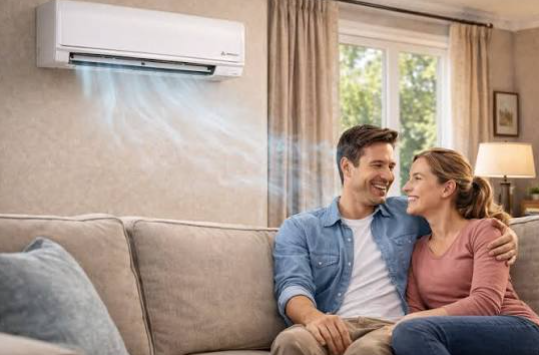
In cooling mode, a Mitsubishi heat pump works by removing heat from indoor spaces and transferring it outside.
This process can provide comfortable summer temperatures without requiring an entirely separate heating and cooling concept. Homeowners can therefore manage year-round comfort through a single type of technology.
Why Homeowners Consider Heat Pumps
Energy efficiency is one of the main reasons people investigate heat pump systems. Since the equipment primarily transfers heat instead of producing all of it directly, it can provide an efficient approach to temperature control under suitable conditions.
However, efficiency depends heavily on correct system design.
Flexible Comfort Options
Different homes have different layouts and comfort requirements. Some properties may benefit from whole-home configurations, while others require targeted temperature control for specific rooms or zones.
A Mitsubishi heat pump may offer flexibility for bedrooms, living areas, additions, renovated spaces, or other areas where individualized comfort is useful.
Zoning can also allow occupants to adjust temperatures according to how different spaces are used.
Proper Sizing Is Essential
Choosing heating and cooling equipment based only on floor area can lead to poor results. Several property characteristics influence the actual heating or cooling requirement.
Insulation levels, window performance, air leakage, ceiling height, building orientation, occupancy, and local weather conditions should all be considered.
Problems With Oversized Equipment
Bigger is not automatically better. Oversized equipment may reach the thermostat setting quickly but operate in shorter cycles than intended.
Poor sizing can affect comfort and overall performance.
Problems With Undersized Equipment
An undersized Mitsubishi heat pump may struggle to maintain the desired indoor temperature during demanding weather conditions.
Correct equipment selection should therefore be based on the property’s actual requirements rather than assumptions.
Installation Quality Affects Performance
Even well-designed equipment cannot perform as intended when installation is poor. Placement, airflow, electrical connections, refrigerant procedures, drainage, and control configuration all influence operation.
Professional installation also helps ensure that indoor and outdoor components are positioned appropriately.
Indoor Unit Placement
Indoor equipment should distribute conditioned air effectively throughout the intended space.
Poor placement can create uneven temperatures or reduce comfort in areas that receive limited airflow. Furniture placement and room layout should also be considered.
Outdoor Unit Considerations
The outdoor section of a Mitsubishi heat pump needs adequate airflow. Leaves, snow, vegetation, and other obstructions should not restrict the surrounding area.
Keeping appropriate clearance around the equipment helps support normal operation.
Maintenance for Long-Term Performance
Like other heating and cooling equipment, heat pumps require routine attention. Filters should be checked regularly, and accessible components should be kept clean.
Professional inspections can examine operating condition, controls, drainage, electrical components, and other system elements.
Watch for Performance Changes
Homeowners should pay attention to unusual sounds, weaker airflow, inconsistent temperatures, unexpected cycling, or changes in normal operation.
A noticeable performance change does not always indicate a major failure, but early investigation can help prevent minor concerns from becoming larger problems.
Is a Heat Pump Suitable for Every Home?
No single heating and cooling solution is ideal for every property. Building design, insulation, existing equipment, climate, comfort expectations, and installation possibilities should all influence the decision.
Before selecting a Mitsubishi heat pump, homeowners should consider how the system will perform under both typical and demanding seasonal conditions.
A detailed assessment can determine suitable capacity, configuration, placement, and overall system design.
Conclusion
Choosing a Mitsubishi heat pump involves more than selecting heating and cooling equipment. Proper sizing, thoughtful placement, professional installation, routine maintenance, and realistic consideration of the home’s heating requirements all influence long-term performance. When these factors are carefully addressed, heat pump technology can provide convenient year-round temperature control, flexible comfort, and efficient operation across changing seasons.